5 Mount Batur Photo Moments Worth Waking Up Early For
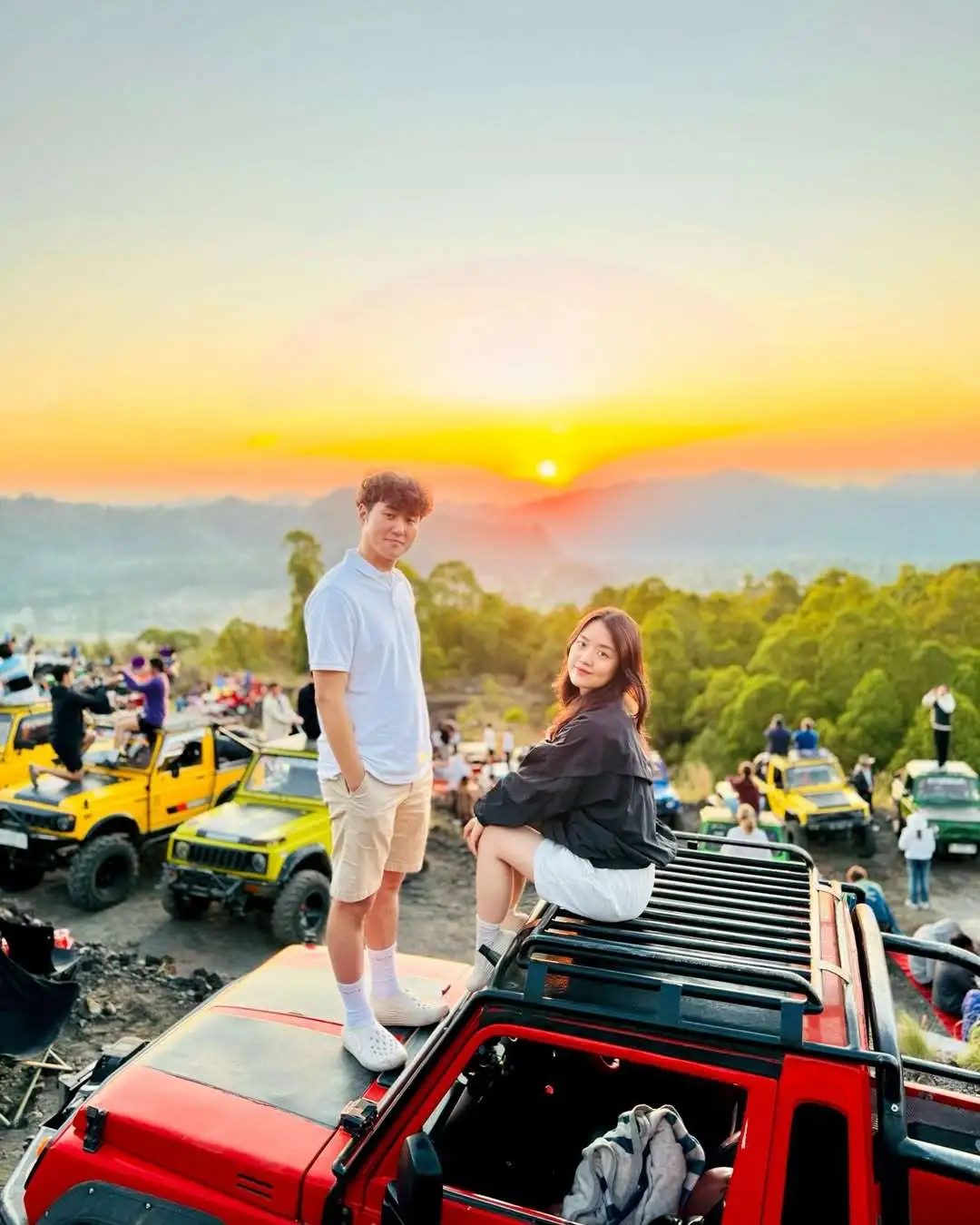
If you are the person who checks the camera battery before checking your own breakfast, Mount Batur has plenty to keep you interested.
The mountain is not only about reaching a viewpoint before sunrise. For photography-focused travelers, the experience changes as the morning develops. The light before sunrise, the trekking trail, the summit area, the shape of a jeep against the landscape, and the textures of Black Lava can all create very different photographs.
That is what makes a Mount Batur photography tour interesting. You are not necessarily looking for one perfect picture. You are following the changing atmosphere of the mountain and looking for moments that match your own style.
There is one important expectation to keep in mind, though. Sunrise, visibility, clouds, and weather conditions can change. No responsible itinerary can guarantee a particular sky or view.
With that in mind, here are five photo moments worth getting up early for.
1. The Pre-Sunrise Light on the Trekking Trail
The first interesting moment can happen before sunrise itself.
If you choose sunrise trekking, the journey begins while the sky is still dark. As you move along the trail, the darkness gradually starts to change.
This transition can create a completely different type of photograph from the bright landscape images you may see later in the morning.
Instead of trying to capture everything, look for simple details:
- The trail disappearing into the darkness
- Headlamps creating small points of light
- Silhouettes of other trekkers
- The changing color of the sky
- Volcanic ground under the early light
- The outline of the surrounding landscape
This is where a little patience helps.
The first light may not appear all at once. The sky can gradually shift as you continue walking.
For trekking photo spots, look beyond the obvious landscape. Sometimes the strongest image is a simple moment showing the scale of the trail and the people moving through it.
Keep Your Camera Ready, Not Just Your Phone
A sunrise trek is not the easiest place to manage a large amount of equipment.
You are walking uphill, carrying your own belongings, and managing changing light conditions.
A small camera setup can be more practical than bringing every lens you own.
Keep your equipment accessible, but secure.
And make sure your phone or camera is sufficiently charged before leaving your hotel.
The early start means you may use your device for navigation, communication, photos, and lighting throughout the morning.
2. The Trail Itself as the Landscape Changes
The Mount Batur trail is not simply the route you take to reach the summit.
For photographers, it can become part of the story.
As the light improves, details that were difficult to see in the dark begin to appear.
The volcanic surface.
The uneven trail.
The people ahead of you.
The changing horizon.
The surrounding landscape.
These details can create useful visual sequences rather than one isolated photograph.
Think about photographing the experience from different distances.
A wider image can show the scale of the trail.
A closer image can focus on footsteps, volcanic ground, or the texture of the path.
A photograph of another member of your group walking ahead can also communicate movement and scale.
This is especially useful if you want your Bali travel photos to tell a story rather than simply document where you went.
Photograph the Experience, Not Just the Destination
One common photography habit is waiting until you reach the main viewpoint before taking out the camera.
That means you can miss much of the journey.
The trail provides a different perspective.
You can capture the preparation, movement, changing light, rest moments, and the gradual transition from darkness into morning.
The result can feel more personal because it shows what the experience actually looked like.
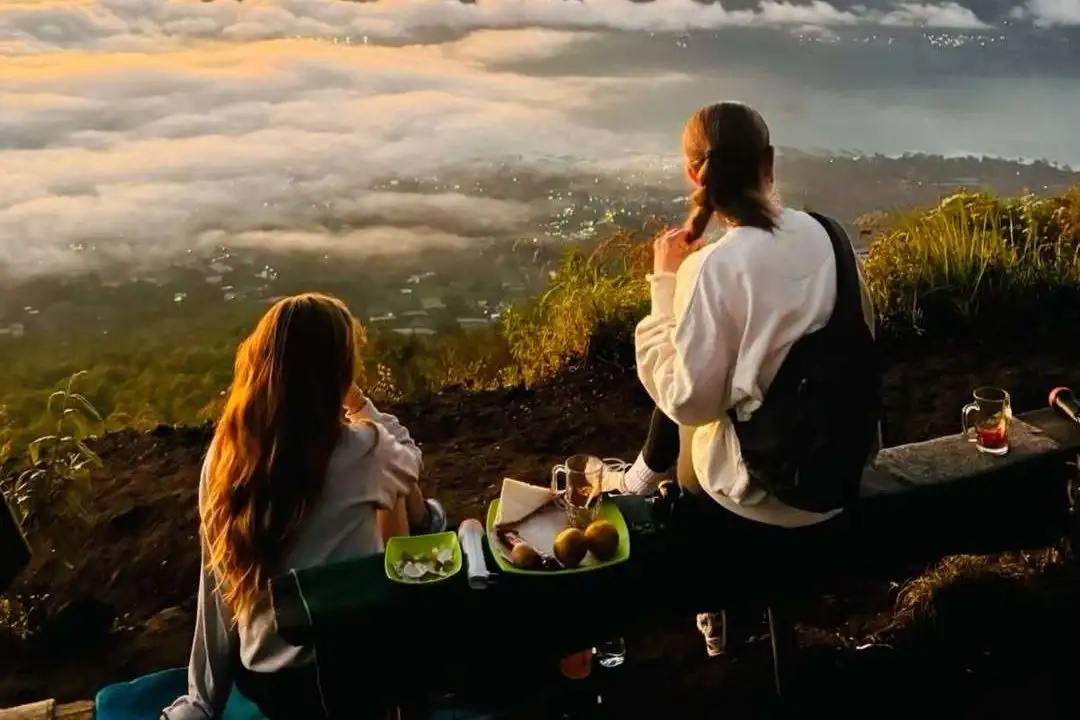
3. The Summit Area Before and Around Sunrise
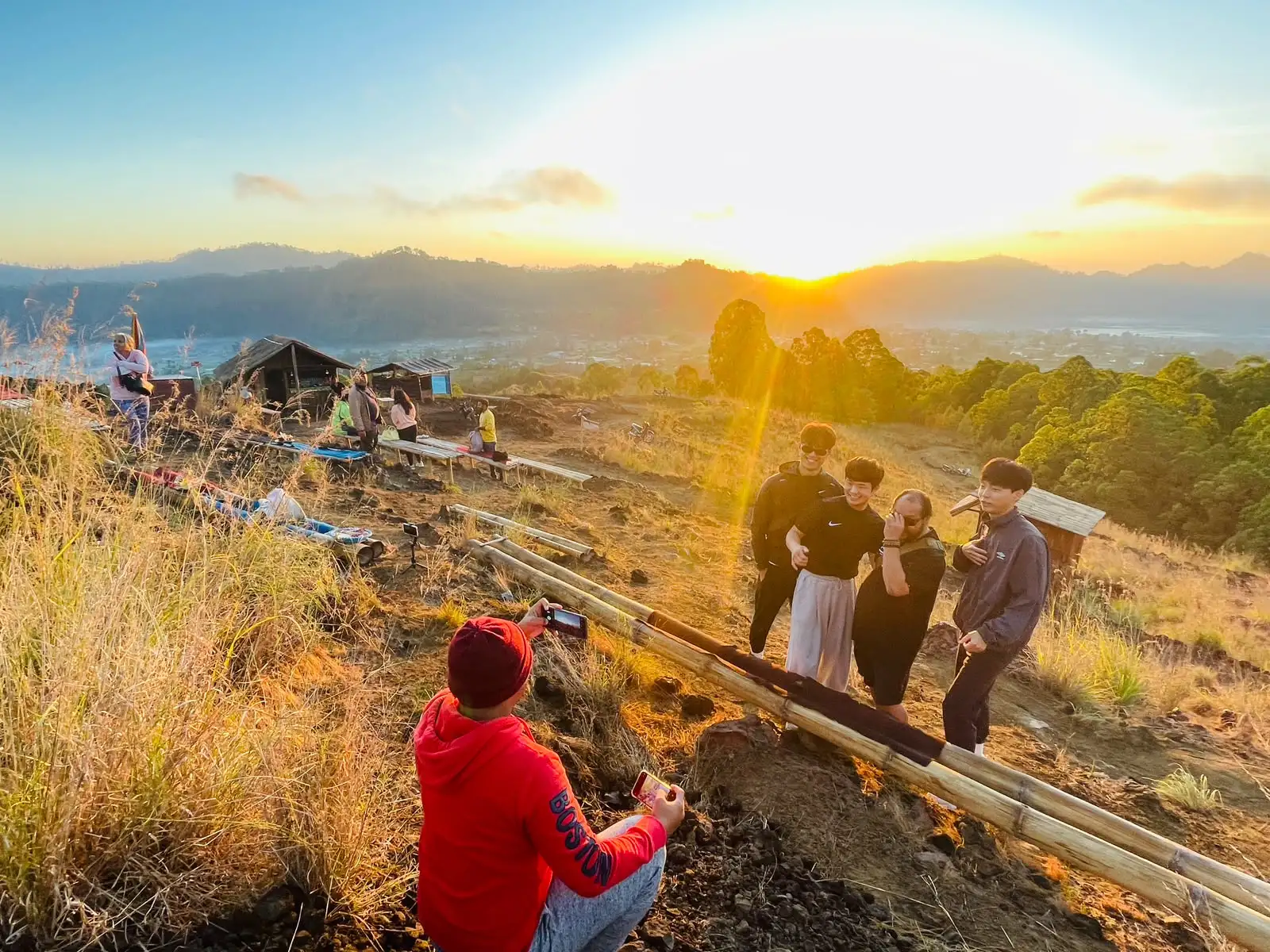
For travelers who choose trekking, the summit area is naturally one of the main photographic moments.
After the uphill section, the environment changes again.
You have reached the upper area.
The sky is getting brighter.
Other trekkers are arriving.
The landscape gradually becomes more visible.
This is where many visitors take their Mount Batur sunrise photos.
But there is no need to photograph only the horizon.
Try looking in different directions.
You can photograph:
- Your trekking group
- The surrounding mountain landscape
- Silhouettes
- Clouds when present
- The changing sky
- Details of the volcanic environment
- People reacting to the morning atmosphere
The exact visibility will depend on the weather.
Some mornings may offer clearer conditions.
Others may have clouds or limited visibility.
That uncertainty is part of outdoor photography.
You can prepare your camera.
You cannot prepare the weather.
Do Not Chase One Exact Shot
Social media can create the impression that Mount Batur always looks exactly the same.
It does not.
The brand's content guidance specifically treats sunrise and visibility as weather-dependent, meaning photographs should not be used to promise a particular sunrise or view.
Instead of thinking:
“I need that exact photo.”
Think:
“I want to photograph whatever the mountain gives me this morning.”
That mindset gives you more room to notice unexpected compositions.
A cloudy morning can produce a different image from a clear morning.
Fog can change the sense of depth.
Changing light can completely alter the same landscape within minutes.
4. The Jeep Silhouette at Sunrise
If trekking is not your preferred way to experience Mount Batur, the jeep creates a completely different photographic subject.
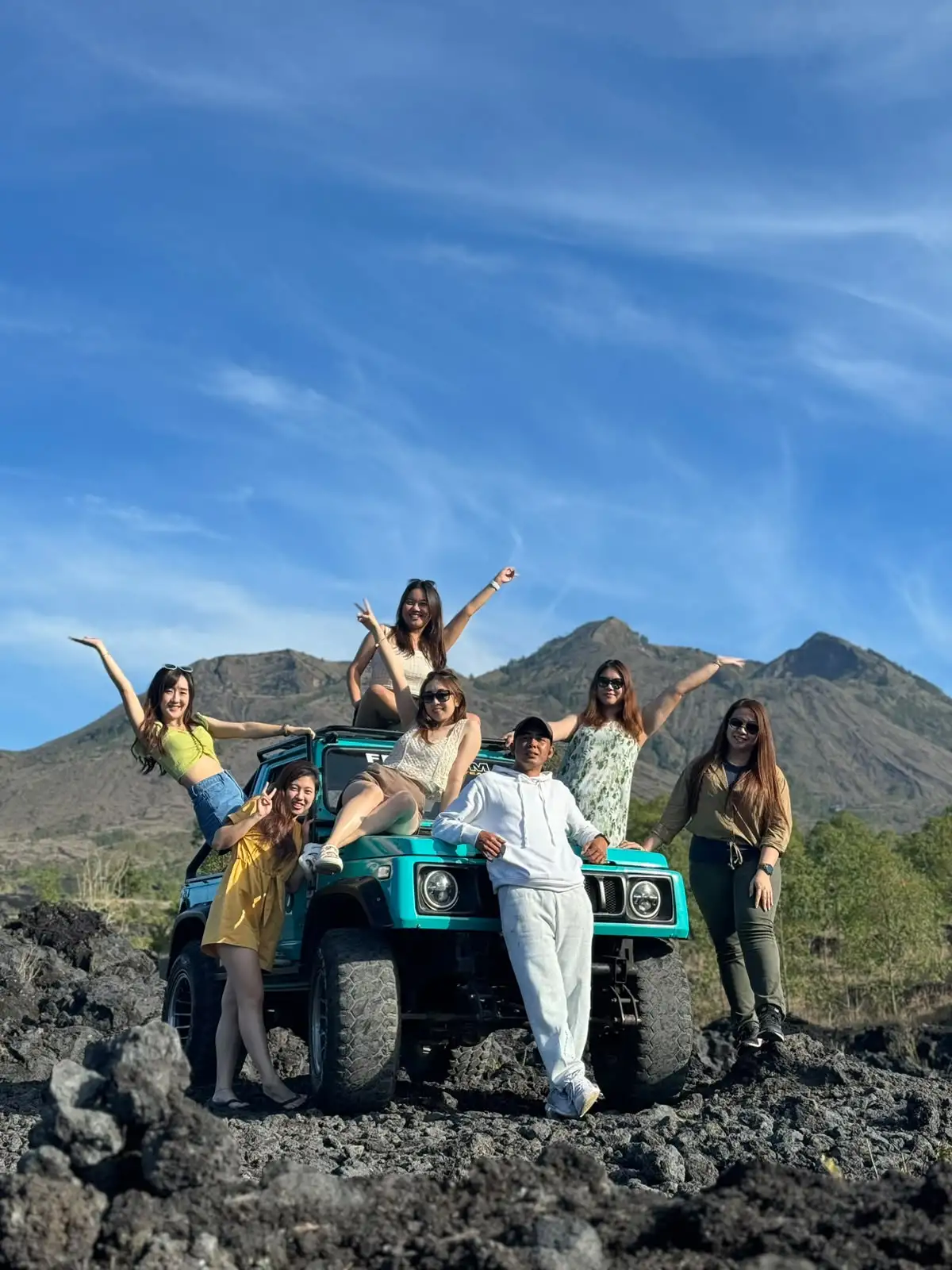
A Mount Batur jeep tour can provide a strong combination of vehicle, volcanic terrain, and early-morning light.
The jeep itself becomes part of the composition.
Instead of photographing only the landscape, you can use the vehicle as a foreground or silhouette element.
Think about:
- Jeep against the morning sky
- Jeep on volcanic terrain
- Side profile of the vehicle
- Group beside the jeep
- Wide landscape with the jeep appearing small
- Details of the vehicle against Black Lava
This is one reason Mount Batur jeep photos can look very different from trekking photography.
You are not standing in the same place or following the same route.
The current sunrise jeep itinerary uses a 4WD vehicle to reach a vehicle-accessible sunrise viewpoint before continuing toward Black Lava.
That creates a visual sequence of its own.
Give the Jeep Some Space
If you want a landscape photograph, do not always fill the entire frame with the vehicle.
Step back when appropriate.
Let the landscape create context around it.
A smaller jeep inside a wider volcanic scene can communicate the scale of the environment more effectively than a close-up.
Of course, always follow the driver's instructions and stay within appropriate areas when taking photographs.
A good photograph is never worth stepping into an unsafe position or interfering with the route.
5. Black Lava Texture and Volcanic Details
The final photo moment is one of the most visually distinctive parts of the jeep experience.
Black Lava photography is less about sunrise colors and more about texture, shape, contrast, and volcanic landscape.
The current jeep routes include Black Lava as one of the key stops after the sunrise viewpoint.
Instead of photographing only a wide landscape, look closer.
Black Lava can give you opportunities to photograph:
- Rough volcanic textures
- Dark rock surfaces
- Patterns in the terrain
- Jeep tracks
- Contrasting light and shadow
- People against the volcanic landscape
- Wide views showing the scale of the area
This is where changing your focal length or simply changing your position can make a major difference.
A wide shot can show the entire landscape.
A closer composition can make the volcanic surface itself the subject.
You do not necessarily need dramatic editing.
Let the texture do some of the work.
Respectful Photography Still Matters
Photography should not come at the expense of the environment, other visitors, or local communities.
Mount Batur is not simply a photo location.
It is a mountain environment visited by local communities, guides, drivers, and travelers.
That means photographers should be mindful of where they stand, where they walk, and what they leave behind.
A few simple habits help:
- Stay on appropriate routes
- Do not step into restricted areas for a photo
- Do not block other visitors
- Follow guide and driver instructions
- Keep personal belongings secure
- Take your rubbish with you
- Avoid disturbing local activities
- Respect the mountain environment
The brand's responsible-tourism direction specifically includes respect for local communities, trail cleanliness, waste reduction, responsible jeep routes, and visitor education.
If another traveler is already taking a photo, give them space.
If a guide asks guests to move, follow the instruction.
The best travel photography does not require disrupting the place being photographed.
What About Kintamani Views?
The wider Kintamani views are another reason many travelers bring a camera.
The landscape around Mount Batur can provide broad compositions that include volcanic terrain and surrounding scenery.
But again, visibility is not fixed.
Clouds can move through the area.
The landscape may look different from one morning to another.
Do not build your entire photography plan around a guaranteed clear view.
Instead, prepare for different possibilities.
If the horizon is clear, use the wider landscape.
If clouds dominate the scene, look for layers and silhouettes.
If visibility is limited, focus on nearby details such as the trail, jeep, volcanic textures, or people.
Photography becomes more interesting when you respond to the conditions rather than fighting them.
Sunrise Trek or Jeep for Photography?
Both can work for photography, but they produce different opportunities.
Trekking
Choose trekking if you want to photograph:
- The trail
- The uphill journey
- Summit surroundings
- Trekkers and silhouettes
- Changing pre-sunrise light
- The physical journey itself
The camera becomes part of the walking experience.
You will carry your equipment while moving uphill, so keep the setup practical.
Jeep
Choose a jeep experience if you want:
- Jeep silhouettes
- 4WD photography
- Sunrise viewpoint photography
- Black Lava
- Volcanic textures
- Less sustained uphill walking
The current sunrise jeep experience is specifically built around a vehicle-accessible viewpoint followed by Black Lava exploration.
Neither is automatically the “photography option.”
They simply create different subjects and perspectives.
A Simple Mount Batur Photography Checklist
You do not need a huge camera bag.
For most travelers, the basics are enough.
Before Leaving
- Fully charge your camera
- Charge your phone
- Bring a power bank
- Clean your lens
- Check storage space
- Pack a small dry bag or protection for your device
- Prepare a light jacket
- Keep your equipment accessible
During the Experience
- Start with wide compositions
- Look for details
- Photograph changing light
- Try silhouettes
- Photograph people at a respectful distance
- Use the jeep as part of the composition
- Look closely at Black Lava textures
- Do not rush every photograph
Most Importantly
Keep your attention on the actual experience too.
It is easy to spend the entire morning looking through a screen.
Take some photos.
Then put the camera down.
Look around.
The mountain is not going anywhere while you take a few seconds to experience it without a lens.
Do You Need a Mount Batur Photography Tour?
Not necessarily.
There is no requirement to book a dedicated photography package simply because you want good travel photos.
A normal Mount Batur trekking or jeep experience can already provide multiple photographic moments.
The more important decision is choosing the route that matches what you want to photograph.
If you want the trail and summit experience, choose trekking.
If you want jeep silhouettes and Black Lava, consider a jeep tour.
If you want a later schedule and daytime volcanic photography, a daytime jeep can be another option.
The brand's core direction, Explore Mount Batur Your Way, is built around exactly this kind of choice. Different travelers can choose trekking, jeep, daytime, or combination experiences based on their interests, schedules, group, and preferred activity level.
Wake Up for the Moment, Not the Guarantee
The five photo moments are simple:
Pre-sunrise light on the trail.
The trekking route as the morning develops.
The summit area around sunrise.
The jeep silhouette against the landscape.
The texture of Black Lava.
Each one offers a different way to photograph Mount Batur.
But none of them comes with a guaranteed sky.
Weather and visibility can change, and that is something every outdoor photographer has to accept.
The better approach is to prepare your equipment, understand your route, respect the environment, and stay flexible.
You might arrive expecting one photograph and leave with something completely different.
That is part of the fun.
If you are planning a Mount Batur photography tour, send us your travel date, number of guests, hotel area, and preferred experience. Our local team can help you compare trekking and jeep options, confirm the current route and pickup arrangement, and choose an itinerary that gives you the type of Mount Batur experience you want to photograph.